





Choosing the Perfect Holster for Your Gun
Choosing the perfect holster for your gun is one of the most underappreciated decisions a concealed-carry permit holder makes. Carrying without a holster invites tragedy — accidental discharges, fumbled draws when speed matters, and a steady erosion of trigger discipline as the firearm rides loose against clothing. A proper holster solves all three problems: it provides concealed and secure transport, covers the trigger guard at all times, and lets you draw the gun cleanly when seconds matter.
Not all holsters are created equal, and the wrong choice will be uncomfortable enough that you stop carrying altogether. Before investing money in any holster, work through what you actually need it to do — comfort, retention, concealment, draw speed, and how it integrates with the clothes you actually wear.
How to Start Choosing the Perfect Holster for Your Gun
Choosing the perfect holster for your gun starts with answering five questions honestly:
- What firearm will you carry? Holsters are model-specific — a holster fitted to a Glock 19 will not securely hold a Sig P365 or a 1911
- Where on your body will you carry it? Different positions need different holster designs
- What clothing will you wear daily? Tucked dress shirts, untucked t-shirts, and jackets each favor different carry methods
- What is your activity level? Sitting at a desk all day is different from being on your feet, bending and reaching, or training in a gym
- Will you ever need to disarm the firearm one-handed? Some retention systems require a free hand to release; others do not
The right answer to each question narrows the field considerably. From there, the choice comes down to material and carry position.
Holster Materials: Leather vs. Molded Plastic
Most quality holsters are built from one of two materials. Each has clear strengths and one or two weaknesses worth knowing when choosing the perfect holster for your gun.
Leather is the traditional choice. Quality leather molds to the firearm and to your body over the first few weeks of wear, producing an exceptionally comfortable fit. The downside is that leather keeps stretching past the point of perfect fit. Many leather holster owners periodically dip their holster in water and let it dry — a controlled re-shrink that restores the original retention.
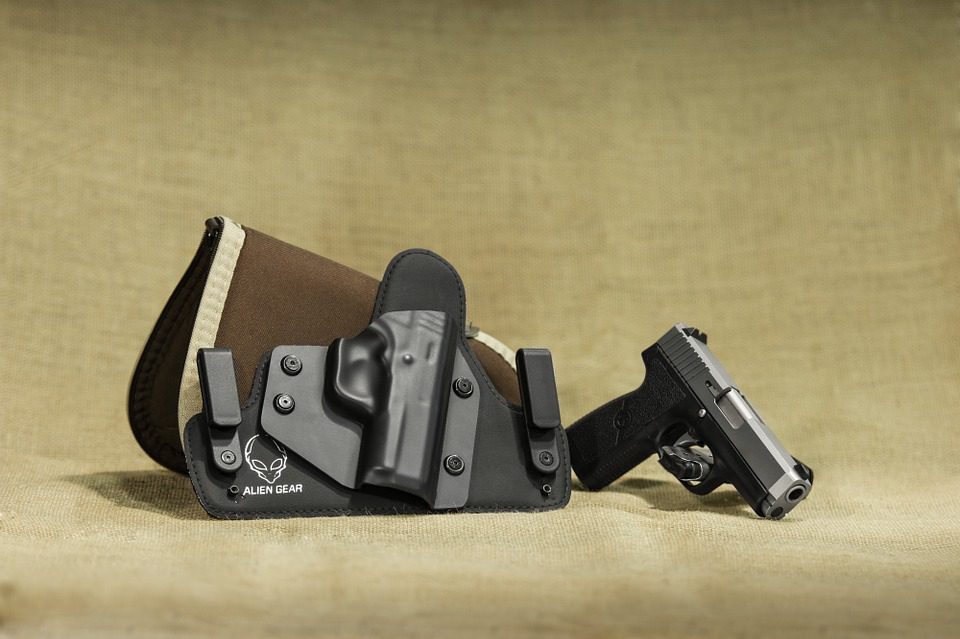
Molded plastic holsters (Kydex, thermoplastic, and injection-molded variants) do not stretch and do not contour to your body the way leather does. What they offer instead is consistent friction and a precise mold to the specific firearm. They make a satisfying click when the gun is fully seated and they hold that retention indefinitely. Their weakness is that they can crack at stress points if dropped on hard surfaces or repeatedly bent. For most concealed carriers today, Kydex or hybrid Kydex-leather holsters are the dominant choice.
Weapon Retention: How Hard Should the Holster Hold On?
When choosing the perfect holster for your gun, retention is the trait most often weighted incorrectly. Retention is the holster’s ability to keep the firearm in place when it is not actively being drawn. Too little retention and the gun comes loose at inopportune moments. Too much and you cannot get the firearm out fast enough when you need it.
For most concealed carriers, an open-top holster with passive retention (friction or a tension screw) is the right balance. Gun snatching attempts on concealed carriers are statistically rare, so the open-top design favors draw speed. If you carry openly, are physically active, or work in a profession where someone might attempt to take your firearm, add an active retention mechanism — typically a thumb-break snap or a Level II rotating hood. Just remember to disengage the retention system as part of the draw stroke; muscle memory built in practice is what saves the day under stress.
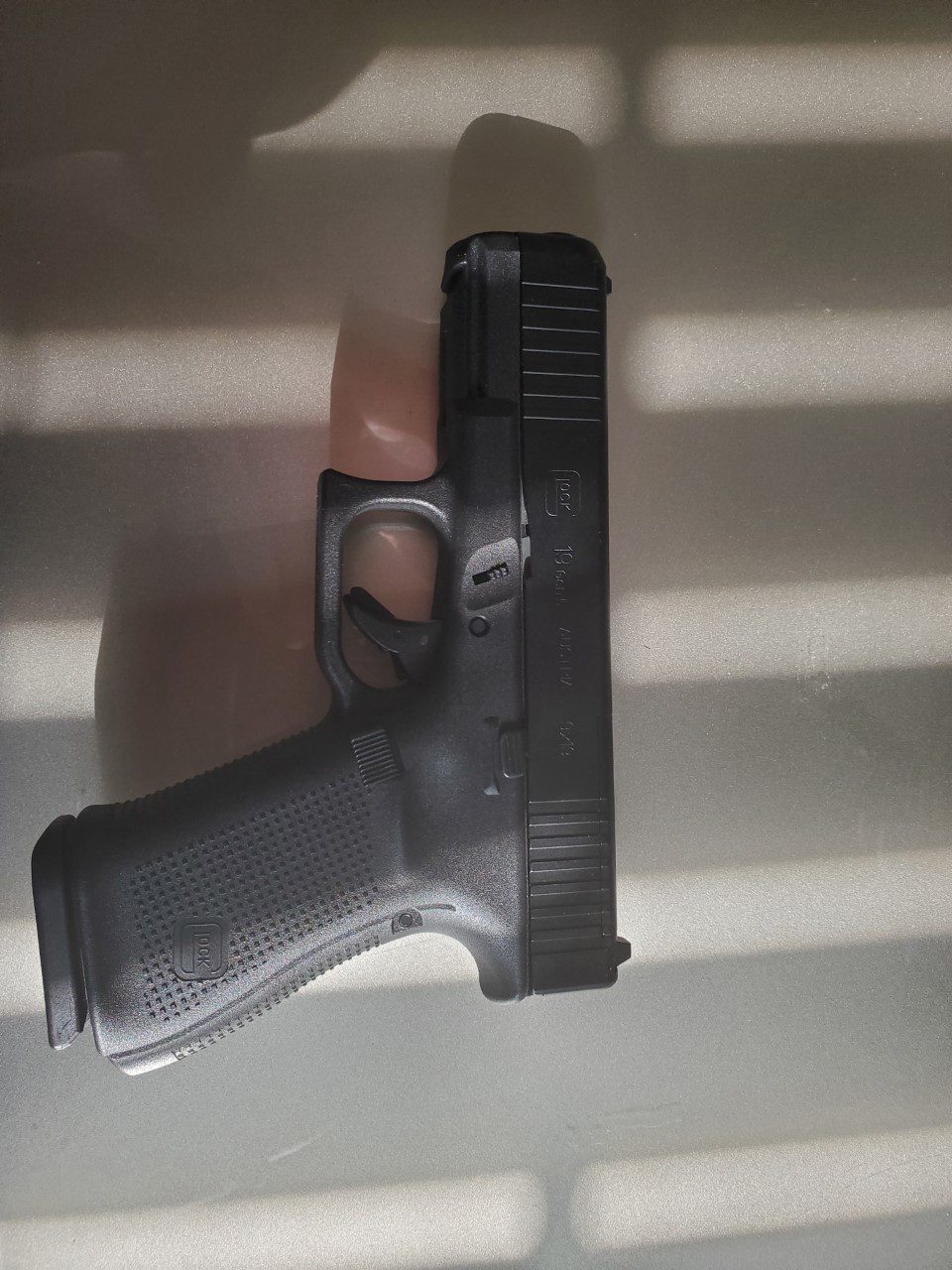
IWB and OWB Holsters: The Two Most Common Carry Positions
Inside-the-Waistband (IWB) holsters offer maximum concealment because the gun rides between your body and the inside of your pants. Most IWB carriers buy pants with about two inches of extra waist room to accommodate the holster comfortably and wear an undershirt to keep the firearm from rubbing against skin. IWB at the 3 to 5 o’clock position is the most common and best-supported configuration; appendix carry (around 1 o’clock) is increasingly popular but takes more training to do safely.
Outside-the-Waistband (OWB) holsters ride on a belt outside the pants. They are the most popular type of holster overall because they are comfortable for long wear and fast to draw from. The 3 o’clock to 6 o’clock positions are standard. OWB conceals well under an untucked shirt or any jacket but is not practical with a tucked-in dress shirt. For most everyday wardrobes, choosing the perfect holster for your gun in this category means a quality leather or Kydex pancake design.
Specialty Carry Options: Pocket, Shoulder, Ankle, and Concealed Bag
Beyond IWB and OWB, several specialty options solve specific problems:
- Pocket Carry Holsters have a tab on the front or back to hook on the pocket edge, preventing the holster from coming out with the gun. Best for small subcompacts and situations where a belt is not available
- Shoulder Rigs hold the firearm under one armpit, with magazine carriers under the other. Excellent under a jacket or sport coat but visibly bulky without one
- Ankle Holsters are typically used for a backup gun rather than a primary. They work well only with small firearms and are slow to draw from — usually requiring you to drop to one knee
- Hidden in Plain Sight holsters are sewn into backpacks, messenger bags, or purses. They conceal extremely well but introduce a slow draw, the risk of separation from the firearm if the bag is set down, and the risk of theft if the bag is left unattended
For typical everyday carry, IWB or OWB on a strong-side belt is the right starting point. Specialty options serve specific needs — a backup ankle gun, a corporate environment that demands tucked-in shirts, a wardrobe that does not accommodate a belt — but they are not the first choice for most carriers. For these niche needs, choosing the perfect holster for your gun depends entirely on the specific scenario you are solving for.
Final Thoughts on Choosing the Perfect Holster for Your Gun
Choosing the perfect holster for your gun is rarely a one-purchase decision. Most experienced concealed carriers own three or four holsters, each suited to a different combination of clothing, activity, and carry need. Start with one well-built IWB or OWB holster matched to your daily clothing, and add specialty options only as actual needs appear.
Try several types in person before committing — most reputable gun shops will let you test-fit holsters with an unloaded firearm. When choosing the perfect holster for your gun, the right holster is the one you will actually wear all day, every day, without taking it off because of discomfort. For more on responsible ownership and storage of the firearm that goes inside it, see our guides on how to store guns safely at home and tips to protect your guns from theft. The Bureau of Alcohol, Tobacco, Firearms and Explosives page on concealed carry rules is also worth a read for federal context, particularly if you travel across state lines with your firearm.